
Solar Contractor Insurance by State
West Virginia Solar Contractor Insurance
West Virginia licenses the wiring through the State Fire Marshal and the contract through the Contractor Licensing Board, sets conditions on solar power purchase agreements, leaves the building code to local adoption and makes comp compulsory with no state fund.
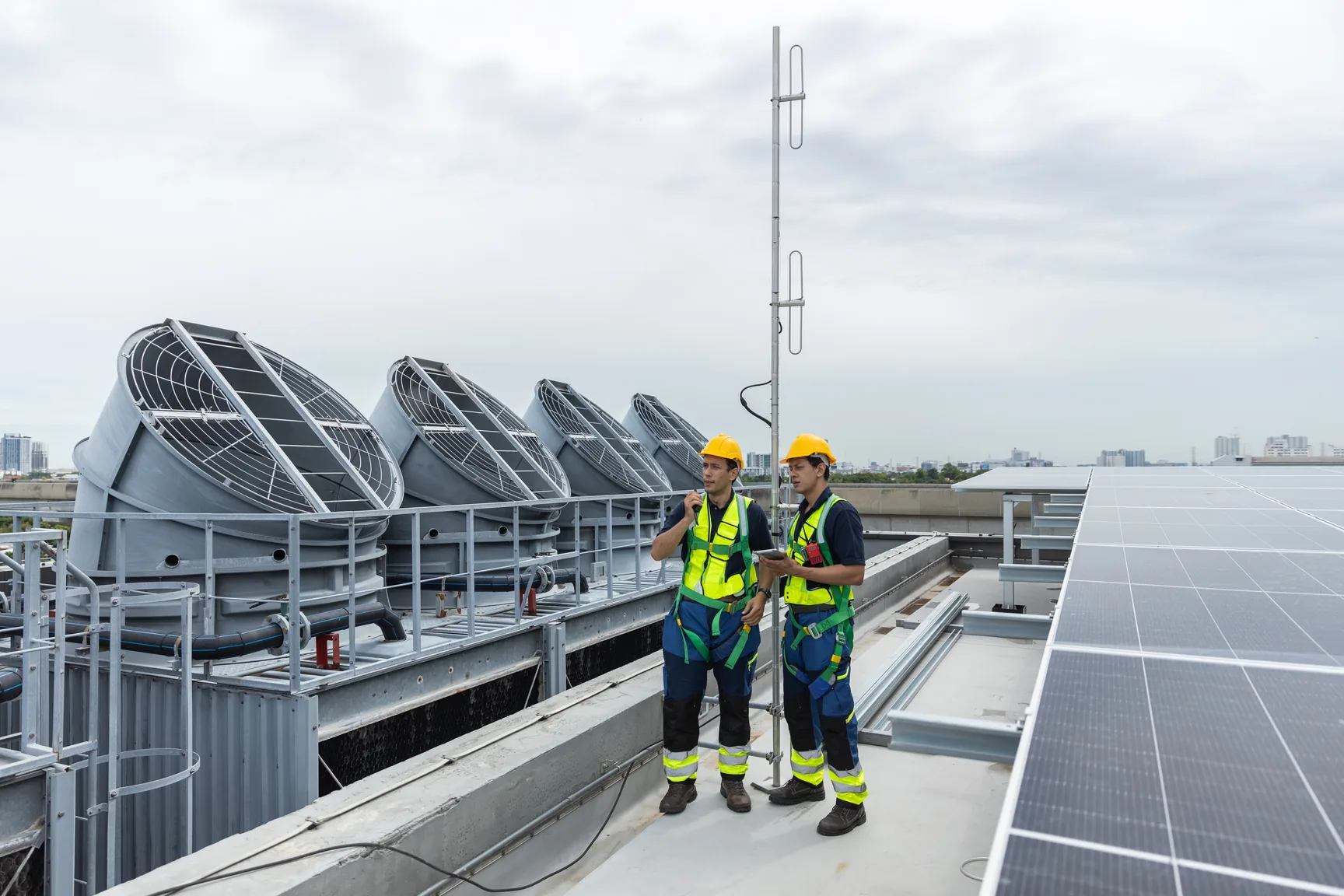
The state licenses a solar contractor in West Virginia on the electrical side through the West Virginia State Fire Marshal’s Office, and licenses the contracting itself through the West Virginia Contractor Licensing Board when a job reaches the cost thresholds the Contractor Licensing Act prints, while a county or city may not demand a license of its own from a firm that holds the state’s. Neither statute names solar in the sections read. The utility statute sets conditions on a solar power purchase agreement for a customer’s premises, among them a type size for the agreement, and keeps the Public Service Commission out of the power rate. The West Virginia State Fire Commission writes a State Building Code rule that names the electrical code edition, yet the statute gives that code force only in the counties and municipalities that adopt it. Workers’ compensation is compulsory for covered employers, bought from authorized private carriers or by permission to self-insure, with no state fund insuring employers.
Each of those findings turns on a qualifier. A license that never mentions solar still reaches the wiring of an array, a power purchase agreement provision is a set of conditions rather than a registration, and a code the state rule names does not bind a job until a local government has adopted it. The sections below take each in turn, with the source’s own words where they matter and advice for the owner.
How the policies themselves work for a solar business anywhere is laid out on the solar contractor insurance page and the coverage pages it links to. This page keeps to what is particular to West Virginia, whether your business does rooftop installation, runs panel cleaning and maintenance routes or takes on ground-mount and solar farm construction.
A two-column comparison. The left column holds what the state licenses or conditions for a solar contractor: an electrician license from the State Fire Marshal, required for electrical work as the national electric code defines it; a contractor license from the Contractor Licensing Board, with electrical contractor a defined term; a bar on a county or city demanding its own license from a firm that holds the state license, though neither statute names solar; conditions the utility statute puts on a solar power purchase agreement, among them a type size, utility-wide caps and sizing to the customer’s premises; and compulsory workers’ compensation, bought from an authorized private carrier or by permission to self-insure, with no state fund. The right column holds what stays with local jurisdictions or the parties: whether the State Building Code, which names the electrical code edition, has force at all, since it applies only in the counties and municipalities that adopt it; enforcement of that code, which belongs to the local jurisdiction; and the power rate in a purchase agreement, which is outside the Public Service Commission’s authority. No figures are shown.
Fire Marshal and Contractor Licensing Board licenses, with solar named in neither
West Virginia licenses electrical work statewide through the State Fire Marshal, and licenses contractors statewide through the West Virginia Contractor Licensing Board once a job reaches the cost thresholds the Contractor Licensing Act prints. Neither the electrician licensing article nor the Contractor Licensing Act names solar installation.
A solar contractor needs a State Fire Marshal electrician license for the electrical work, which the statute defines by the scope of the national electric code, and a contractor license from the Board when the job reaches the Act’s thresholds. A city or county may not demand its own electrician license or contractor license from a firm that holds the state license.
Authority: W. Va. Code §29-3B-2; §29-3B-9; §30-42-3(d)–(e); §30-42-6(a); §30-42-20
The electrical license starts with a bar in the electrician licensing article:
“no electrical work may be performed, offered, or engaged in for compensation or hire within the state of West Virginia by any person, firm, or corporation unless such person, firm, or corporation possesses a license and a certificate issued by the State Fire Marshal”
The same section defines the work the bar reaches, by reference to a national standard:
“means the installation of wires, conduits, apparatus, fixtures, other appliances, equipment, or systems for transmitting, carrying, controlling, or using electricity as defined in the scope of the national electric code.”
The West Virginia State Fire Marshal’s Office licenses electricians statewide through its Regulatory and Licensing Division. Notice what the definition turns on. It speaks of wires, conduits, apparatus and systems for carrying or using electricity, within the scope of the national electric code, and it says nothing of solar, so on an array the part it reaches is the electrical work: the conductors, the tie-in and whatever else that code covers.
The contractor license is a separate statute with a separate bar:
“No person may engage in this state in any activity as a contractor or submit a bid to perform work as a contractor, as defined in this article, unless that person holds a license issued under the provisions of this article.”
The Act then defines the kind of contractor whose business is electrical equipment:
“means a person who engages in the business of contracting to install, erect, repair, or alter electrical equipment for the generation, transmission, or utilization of electrical energy.”
The West Virginia Contractor Licensing Board licenses contractors statewide under the Contractor Licensing Act. An array generates electrical energy, but the Act does not say the word solar, and the pages and sections read do not either. As advice, read the definition against the work your firm actually bids, ask the Board in writing how it treats a firm like yours, and keep its answer in the company file.
Because the licenses are written by different offices, a firm can satisfy the electrical bar and miss the contractor bar. As advice, name on each proposal the person who holds the Fire Marshal license for the wiring. How a liability policy treats damage your crews cause on a roof or in a building, and the electricians you subcontract, is set out on the general liability page.
Cities and counties may not ask for a license of their own
West Virginia writes the local limit into each statute. The electrician article says:
“no municipality, local government or county may require any license or other evidence of competence as an electrician from any person, firm or corporation who or which holds a valid and current license issued pursuant to this article”
The contractor act carries a matching section:
“no municipality, local government, or county may require any additional occupational license or other evidence of competence as a contractor from any person, firm, or corporation who or which holds a valid and current license issued pursuant to this article”
These sections speak to licenses and evidence of competence, and say nothing about permits, inspections or the building code, which are the local building office’s to administer. As advice, keep a copy of both state licenses in every job file, and if an office insists on a license of its own, ask it to say in writing what it is relying on.
The utility statute’s conditions on a solar power purchase agreement
West Virginia’s public utility statute lets a solar photovoltaic facility on a customer’s premises sell its output to that customer under a power purchase agreement without the facility becoming a regulated public service, on stated conditions: the agreement must be printed in a minimum type size, a utility-wide cap limits the agreements and net metering arrangements, each customer’s facility is limited to its own premises and a size ceiling by customer class, and the customer notifies the utility. The Public Service Commission has no authority over the power rate in these arrangements.
Authority: W. Va. Code §24-2-1(a)(7)
The rule that reaches a solar sale in West Virginia is in the Public Service Commission’s jurisdiction section, and it is written as an exception to what counts as a public service. The provision reads:
“the provision of a solar photovoltaic energy facility located on and designed to meet only the electrical needs of the premises of a retail electric customer, the output of which is subject to a power purchase agreement (PPAs) with the retail electric customer”
The conditions fall on the solar provider that offers a power purchase agreement: the agreement document is held to a type-size rule, and the facility is sized to the customer’s own premises. The sections read add no installer qualification, no seller registration and no written disclosure of terms beyond the type-size rule. The law covers residential, commercial and industrial customers, with a different size ceiling for each.
The condition that touches the agreement document itself is the type size:
“PPAs must be 11 point font or larger;”
Read the provision as what it is: conditions on the solar power purchase agreement, which the statute lists so that a facility meeting them is not treated as a public service. It does not make a seller register with a state body, and the sections read add no installer qualification. The other conditions the headline names, the utility-wide cap, the premises sizing and the customer’s notice to the utility, fall on how the arrangement is structured rather than on a disclosure the customer reads.
The statute also marks the edge of the Commission’s reach:
“The Public Service Commission may promulgate rules to govern and implement the provisions of interconnections for PPAs, except the PSC does not have authority over the power rates for the arrangements between the on-site generator and the customer”
So the Commission may write rules for interconnecting these facilities, but the rate in the arrangement between the on-site generator and the customer is outside its authority. The Public Service Commission of West Virginia is the utility regulator: net metering and interconnection rules, which fall on the customer and the utility, and the power purchase agreement provision that leaves the power rate outside its authority. As advice, if your business sells power rather than hardware, put the rate terms in a document the customer can read and keep a signed copy. The professional liability page explains how a policy treats an output estimate a customer relied on.
What a provider can check before a customer signs a purchase agreement
None of what follows is a rule the state has adopted beyond the conditions quoted above; it is advice for the owner whose name is on the agreement.
- The document itself. The statute holds the agreement to a minimum type size. Print the final form at the size the quoted condition names before it goes out, and do not let a template change reduce it.
- The rate. The Commission has no authority over it, so the customer has no regulator to ask what the number means. State how the rate is set and what changes it.
A code edition the rule names and a local government that decides where it applies
West Virginia’s State Building Code, a rule of the State Fire Commission, names the National Electrical Code as a referenced standard and carries exceptions that are outside the solar photovoltaic article. The statute gives the code force in the counties and municipalities that adopt it and leaves enforcement to the local jurisdiction.
Solar wiring on a building is built to the National Electrical Code edition the State Building Code names where the county or municipality has adopted that code, and the local building department enforces it; the solar article applies as the adopted edition prints it.
Authority: 87 CSR 4, §87-4-4; W. Va. Code §15A-11-5(a), (d)
The State Building Code is a legislative rule of the State Fire Commission. Its adoption subsection names the electrical code edition:
“The 2020 edition of the National Electrical Code, NFPA 70, with the following exception:”
The rule describes its own purpose this way:
“This rule establishes the standards considered necessary by the State Fire Commission for the safeguarding of life and property and to ensure compliance with the minimum standards of safe construction of all structures erected or renovated throughout this state.”
That scope reads broadly, but the statute that authorizes the rule decides where the rule bites. It gives the State Building Code force in a limited set of places:
“have force and effect in those counties and municipalities adopting the State Building Code”
And it leaves the work of enforcing it to those places:
“Enforcement of the provisions of the State Building Code is the responsibility of the respective local jurisdiction.”
Put the quotes together. The rule names the edition, and local adoption decides where it applies. A crew that wires an array in a county that has adopted the State Building Code answers to the edition the rule prints, enforced by that county’s office, while a job in a place that has not adopted it is a question for that place. As the obligation above states, the solar article applies as the adopted edition prints it.
As advice, put these questions on the permit checklist for every address: has this county or municipality adopted the State Building Code, which edition does its inspector read from, and has it added anything of its own to the photovoltaic article. Settle disagreements with the inspector before the work, not after the finish.
The State Fire Commission’s rule is the reference point, not the last word. A county that has adopted the code may enforce it through its own office, and a municipality inside that county may do the same. If a job crosses from a municipality into the county around it, ask each office which of them inspects the finished wiring, and write the answer on the permit file so the crew lead knows whose edition and whose sign-off to plan around.
How a liability policy treats a fault in finished wiring that comes to light later is explained on the general liability page.
Workers’ compensation: private carriers, self-insurance and a former state system
Workers’ compensation is compulsory in West Virginia for the employers its law covers. An employer buys the coverage from a private carrier authorized to write it in the state or is permitted by the Insurance Commissioner to self-insure. The state once ran the coverage itself and opened the market to private carriers, and no state fund now insures employers.
A solar contractor with employees carries a workers’ compensation policy from an authorized private carrier, or qualifies with the Insurance Commissioner to self-insure; an employer that fails to maintain coverage loses certain defenses in an employee’s injury suit.
Authority: W. Va. Code §23-2-1(a); §23-2C-15(a); §23-2-8; §23-2-9(a); §23-2C-2(h); §23-2C-1(c)
The chapter reaches any business that regularly employs others. Its employer section states:
“all persons, firms, associations, and corporations regularly employing another person or persons for the purpose of carrying on any form of industry, service, or business in this state, are employers within the meaning of this chapter and are subject to all requirements of this chapter”
An employer that wants private coverage buys it from
“a private carrier licensed and otherwise authorized to transact workers’ compensation insurance in this state”
and the Code defines the carrier that way:
“means any insurer or the legal representative of an insurer authorized by the Insurance Commissioner to provide workers’ compensation insurance pursuant to this chapter.”
The other route is to carry the risk directly:
“may apply for permission to self-insure their workers’ compensation risk”
The Insurance Commissioner of West Virginia is the insurance regulator; authorizes private carriers to write workers’ compensation, approves self-insurance, and keeps the notice of an employer that lacks coverage. For a solar business with a payroll, an employer that takes neither route faces this:
“All employers who fail to procure and continuously maintain workers’ compensation insurance as required by this chapter or who fail to obtain permission to self-insure their workers’ compensation risk as permitted by §23-2-9 of this code shall be liable to their employees”
The state formerly ran this coverage itself. The article that built the new system describes where that ended:
“The state opened to a private, competitive market for workers’ compensation insurance on July 1, 2008. This section remains in this code for historical purposes.”
The sections of that article that created the former state insurer read as repealed on the Code site, and the sections that remain regulate private carriers. That is why this page names no insurer and no fund: as the finding above states, no state fund insures employers. As advice, treat the market as private: place the policy through an agency, compare carriers, and settle before the season who on each job is your employee. Crew classification, audits and how a policy follows a crew that travels are set out on the workers’ compensation page. Nothing here reaches past West Virginia’s border; for a job in a neighboring state, check that state’s rules.
West Virginia lists a Contractor Licensing Board and the State Fire Marshal’s Office below. OSHA’s Fall Prevention Campaign adds the federal reference for ladders, scaffolds and roof work.
The offices that license, adopt, regulate and enforce for a West Virginia solar firm
The Insurance Commissioner of West Virginia is the state’s insurance regulator; authorizes private carriers to write workers’ compensation, approves self-insurance, and keeps the notice of an employer that lacks coverage. Any agency that sells you a policy, this agency among them, can be looked up on NIPR.com.
The other public bodies behind this page each hold a separate part of the picture. Each link goes to the body’s own site or to the statute that names it, and each role is stated as that body or statute gives it:
- West Virginia State Fire Marshal’s Office: licenses electricians statewide through its Regulatory and Licensing Division
- West Virginia State Fire Commission: proposes the State Building Code rule that names the National Electrical Code as a referenced standard
- West Virginia Contractor Licensing Board: licenses contractors statewide under the Contractor Licensing Act
- Public Service Commission of West Virginia: utility regulator: net metering and interconnection rules, which fall on the customer and the utility, and the power purchase agreement provision that leaves the power rate outside its authority
In practice the Fire Marshal and the Board answer the license questions, the Fire Commission’s rule names the code edition, and the building office of the county or municipality where a crew works answers whether that code applies and how it is enforced.
Which West Virginia counties sit inside each Census metro area
The cards below show the largest metropolitan areas with a principal city in West Virginia, as the U.S. Census Bureau delineates them, and the West Virginia counties inside each.
Huntington-Ashland, WV-KY-OH
Part of this metro lies outside West Virginia; this card lists its West Virginia counties only: Cabell County, Putnam County and Wayne County.
Hagerstown-Martinsburg, MD-WV
Part of this metro lies outside West Virginia; this card lists its West Virginia counties only: Berkeley County and Morgan County.
Charleston, WV
Made up of Boone County, Clay County and Kanawha County.
Morgantown, WV
Made up of Monongalia County and Preston County.
Wheeling, WV-OH
Part of this metro lies outside West Virginia; this card lists its West Virginia counties only: Marshall County and Ohio County.
Weirton-Steubenville, WV-OH
Part of this metro lies outside West Virginia; this card lists its West Virginia counties only: Brooke County and Hancock County.
The state licenses are the same in every county, but whether the State Building Code applies is decided county by county and municipality by municipality. A metro area is therefore a set of separate building offices rather than a uniform market. As advice, log the county and the municipality for every job you price, and check that place’s answer before the proposal goes out.
Matching each West Virginia finding to a coverage page
The findings above say where the state sets a rule and where it leaves a rule to a local government. The policies that answer for the work are the ones a solar business carries wherever it works, and each has its own page:
- Licensed wiring, the electricians you bring in and damage to the roof or building under the array point to general liability.
- A power purchase agreement’s output estimate, and a design a customer relied on, point to professional liability.
- The compulsory comp law points to workers’ compensation, placed with an authorized private carrier.
- Trucks and trailers that carry modules and racking between the yard and the job point to commercial auto.
- Harnesses, lifts and modules waiting on a roof point to tools and equipment.
- Agreements that ask for limits above the primary layer point to umbrella liability.
Which of those weigh heaviest depends on the work, and the pages on rooftop installation, panel cleaning and maintenance and ground-mount and solar farm construction take each kind of work on its own terms. When you are ready to put the pieces together for West Virginia jobs, a quote request is the place to start.
State rules decide who may do the work and how; the policies decide who pays when something goes wrong.
- A license, registration or certification is a requirement of the state, not insurance.
A panel for West Virginia in rows. Each row sets a requirement of the state beside the exposure that requirement leaves open and the coverage line that answers it. License to install: A state electrician license exists; the text read names no solar work. It leaves open damage to the roof, the building or a neighbor’s property from the installation work, which General Liability answers. Solar sales and installer rules: The state sets its own rules for solar sellers, installers or providers. It leaves open a design, sizing or output estimate the customer relied on that turns out wrong, which Professional Liability answers. Electrical code: The state names the National Electrical Code in part; local codes govern the rest. It leaves open a wiring or tie-in fault traced back to the work after the job is done, which General Liability answers. Workers’ compensation: Required for covered employers, bought in the open market. It leaves open a crew member hurt on the job, which Workers’ Compensation answers. Notes: A license, registration or certification is a requirement of the state, not insurance. The conclusion reads: State rules decide who may do the work and how; the policies decide who pays when something goes wrong. No figures are shown.
Nearby states we also write
West Virginia coverage, services and state offices
What we insure
Coverage lines
West Virginia solar contractor insurance questions
Our electricians hold State Fire Marshal licenses. Do we still need a contractor license to bid an array?
The licenses are separate. The West Virginia State Fire Marshal’s Office licenses the electrical work, while the Contractor Licensing Act bars anyone from acting as a contractor, or bidding contractor work, without a license from the West Virginia Contractor Licensing Board, when the job reaches the cost thresholds the Act prints. The Act defines an electrical contractor. Check the Act’s thresholds against each bid, and put your scope to the Board in writing.
A county building office asked for a local electrician license on top of ours. Can it do that?
The statute says no municipality, local government or county may require any license or other evidence of competence as an electrician from a person or firm holding a valid and current state license, and the contractor act says the same about an additional occupational license. Cite the sections named in the authority lines above, and keep your state license current so that the protection applies.
What conditions does the state attach to a solar power purchase agreement we offer a business customer?
The utility statute lets a solar facility on a customer’s premises sell its output under such an agreement without becoming a public service, on conditions: a minimum type size for the agreement, utility-wide caps, sizing to the customer’s own premises and a notice to the utility. The Public Service Commission of West Virginia has no authority over the power rate. The sections read add no seller registration.
Who decides whether the State Building Code’s electrical edition applies to the wiring on our job?
The county or municipality where the building stands. The West Virginia State Fire Commission writes the rule that names the edition, but the statute gives the State Building Code force in the counties and municipalities that adopt it and leaves enforcement to the local jurisdiction. Before you design, ask the local building office whether it has adopted the code and what it applies to solar wiring.
With the former state compensation system gone, where does a new solar crew’s comp policy come from?
From a private carrier the Insurance Commissioner of West Virginia has authorized to write workers’ compensation, or from the Commissioner’s permission to self-insure. No state fund insures employers. Request private-market quotes before you weigh self-insurance, and have the policy in force before anyone on the payroll works on a roof or in a trench.
What does a solar business risk if its comp coverage lapses in the middle of a season?
An employer that fails to procure and continuously maintain coverage, or to obtain permission to self-insure, becomes liable to its employees and loses certain defenses in an injury suit. As advice, track the policy’s expiration date beside your job calendar, ask every subcontractor for a current certificate, and do not let a crew start while a renewal is pending.
Which public office regulates the carriers and agencies behind a West Virginia solar program?
The Insurance Commissioner of West Virginia, the state’s insurance regulator. It authorizes the private carriers that write workers’ compensation and approves self-insurance. An agency that quotes your program, ours included, can be looked up on NIPR.com. Ask for the agency’s license details before you sign, and keep the confirmation with your insurance file.
This page describes insurance for solar contractors operating in this state. It is general information, not legal advice and not a statement of coverage. Licensing, interconnection and code requirements change; verify current requirements with the agency named before relying on them.
Get a quote for your West Virginia solar contracting business
Tell us which licenses your firm holds, the counties where your crews pull permits and whether you sell power purchase agreements, and we will build the program around those answers.