
Solar Contractor Insurance by State
Colorado Solar Contractor Insurance
Colorado reserves photovoltaic electrical work to registered electrical contractors and a closed class of photovoltaic installers, writes its own rules for home solar sales, puts installation crews under certified or licensed supervision, adopts the electrical code statewide and makes workers’ compensation compulsory.
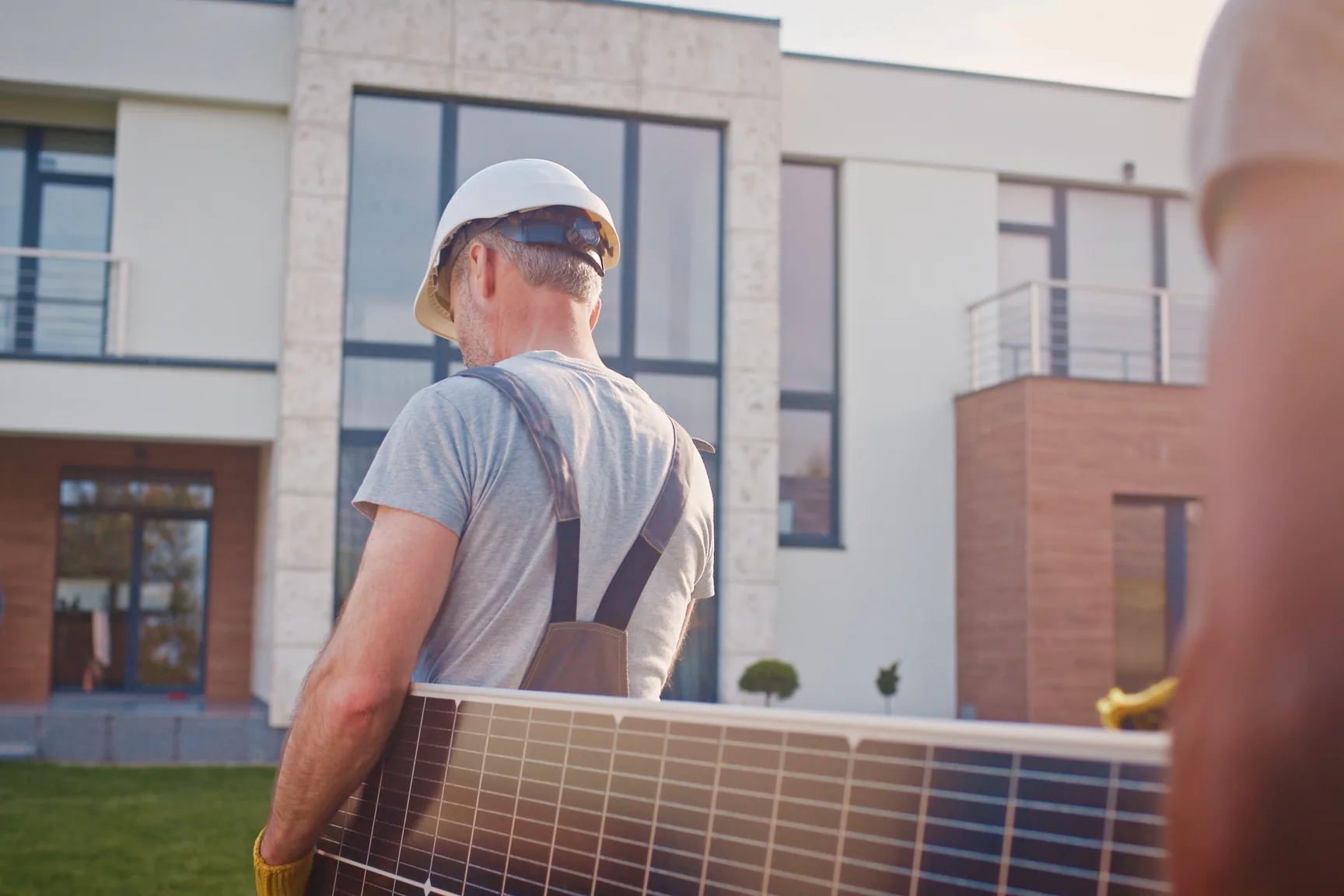
On a Colorado array, the photovoltaic electrical work belongs by statute to a firm the Colorado State Electrical Board has registered: an electrical contractor, a registration open to any business that meets its terms, or a photovoltaic installer, a registration kept for firms that were already doing the work before it began. A home solar sale answers to a residential consumer law with a disclosure form, contract terms and warranties; on the installations the supervision statute covers, the crew setting modules and racking works under a certified practitioner or a licensed electrician, at a house or not; the Board adopts the electrical code for the whole state; and workers’ compensation is compulsory, with a fund the state created among the ways to secure it.
The sections below quote the statutes and the Board’s rule where the wording matters and mark advice as advice. How each policy works for a solar business anywhere is on the solar contractor insurance page; this page stays with Colorado, whatever the mix of rooftop installation, cleaning and maintenance routes and solar farm and ground-mount construction your crews take on.
Photovoltaic electrical work and the firms allowed to do it
Colorado reaches solar installation through its electrical licensing law. The State Electrical Board registers electrical contractors and licenses electricians, and the law lets only an electrical contractor or a registered photovoltaic installer perform or offer to perform photovoltaic electrical work, with the work on the largest systems reserved to licensed electricians and supervised apprentices.
A solar installer in Colorado works as a Board-registered electrical contractor with a licensed master electrician in charge of its electrical work, or, if it was already installing before the photovoltaic installer registration began, as a registered photovoltaic installer with a NABCEP-certified installation professional on staff. Mounting and racking crews still work under the on-site supervision rules in the state’s solar installation statute.
Authority: C.R.S. 12-115-107(2)(f); 12-115-109; 12-115-110(5), (7); 40-2-128(2)(a.5)
The rule at the center of this finding sits in the electrical practice act, and it is brief:
“Only an electrical contractor or a photovoltaic installer may perform or offer to perform photovoltaic electrical work”
The sentence goes on to set a size line, above which the work is kept for licensed electricians and supervised apprentices. For a business, the route the act leaves open is the contractor registration:
“No person, firm, copartnership, association, or combination thereof shall engage in the business of an electrical contractor without having first registered with the board.”
The electricians themselves are licensed through the Colorado Division of Professions and Occupations. Notice that the photovoltaic work sentence reaches offering the work as well as performing it. As advice, keep the wiring out of a proposal unless the firm signing it holds the registration, or the proposal names the registered electrical contractor doing it.
The statute title that holds the Board’s law carries no general or home improvement contractor license. A county that has adopted a building code may license building contractors in its unincorporated areas, and the county statute keeps the state’s electricians outside that license:
“"Building contractor" shall not include an electrician required to be licensed by the state pursuant to article 115 of title 12”
As advice, on a job outside city limits, ask the county building office whether its license reaches your roof or site crew.
Subcontracted electricians, and a roof or building your crew damages while mounting the array, are liability questions, and the general liability page walks through them.
A photovoltaic installer registration that new firms cannot join
The other name in the photovoltaic work sentence is the photovoltaic installer. The registration duty sits in the middle of a longer sentence in the electrical practice act:
“shall register as a photovoltaic installer with the board”
The state’s solar installation statute defines who counts. The firm is not a registered electrical contractor, and it:
“Employs a NABCEP PV installation professional, as defined in section 12-115-103 (7.7).”
The definition also requires that the firm was already performing photovoltaic electrical work before the registration was created, and that it registers with the Board inside the window the statute sets. That makes the photovoltaic installer a closed class for firms already in the trade, not a credential a new company can apply for.
A firm entering Colorado solar now reaches the photovoltaic electrical work through the electrical contractor registration, with a licensed master electrician in charge, or leaves that work to a firm that holds it. As advice, when you team with a company that calls itself a registered photovoltaic installer, confirm it with the Board and ask who its certified installation professional is.
A two-column comparison. The left column holds what Colorado writes only for a home solar agreement: a written disclosure form the solar sales company gives the consumer before any purchase, lease or power purchase agreement; required contract terms, a welcome call and a cancellation right, with the installation company named in the paperwork; and roof-penetration and workmanship warranties, with a violation treated as a deceptive trade practice. The right column holds what is not limited to homes: photovoltaic electrical work done only by an electrical contractor registered with the Electrical Board or by a photovoltaic installer from a class closed to new firms; on-site supervision of the crew installing modules, racking and wiring by a certified photovoltaic practitioner or a licensed electrician; the electrical code the Board incorporates for the whole state, with the solar article as the adopted edition prints it; and compulsory workers’ compensation, secured through the state-created fund, an authorized private insurer or approved self-insurance, with a subcontractor’s crew counted as the hiring business’s own. No figures are shown.
Home solar agreements under the residential clean energy law
Colorado has a residential solar consumer law, the residential clean energy systems part of the Colorado Consumer Protection Act (C.R.S. 6-1-1801 to 6-1-1811), that requires a solar sales company to give the homeowner a written disclosure form before any purchase, lease or power purchase agreement, sets contract terms, a welcome call and a cancellation right, and requires roof-penetration and workmanship warranties. Separately, the state’s solar installation statute puts module, racking and photovoltaic electrical work under on-site supervision by a NABCEP-certified practitioner or a licensed electrician.
Authority: C.R.S. 6-1-1801 to 6-1-1811; C.R.S. 40-2-128(1)
The law’s central duty falls before anything is signed:
“Before entering into an agreement with a consumer for a residential solar electric system or residential battery energy storage system, a solar sales company shall provide to the consumer a written disclosure form”
The customer it protects is defined by personal, family or household purposes, which is why this is a residential law:
“"Consumer" means an individual who seeks or acquires a residential solar electric system or residential battery energy storage system for personal, family, or household purposes.”
The installer is defined as well, and the disclosure form and the contract must name it, so a crew that installs for someone else’s sales team is still written into the paperwork:
“"Solar installation company" means an entity that installs a residential solar electric system or residential battery energy storage system on behalf of a consumer or a third party from whom a consumer will:”
A firm that sells or installs home solar or battery systems in Colorado gives the disclosure form, uses the required contract terms and warranties, and answers for its independent sales contractors; a violation is a deceptive trade practice. On the solar installations the state’s renewable energy standard law covers, the crew installing modules and mounting equipment works under a NABCEP-certified supervisor or a licensed electrician, within the statute’s crew ratio, and that rule is not limited to homes.
“A solar sales company shall provide a warranty to address defects in the workmanship of a residential solar electric system”
“A person that, in the course of the person's business, violates this part 18 commits a deceptive trade practice pursuant to section 6-1-105.”
Enforcement brings in the Colorado Attorney General, whose part here is consumer protection; a violation of the residential solar consumer law is a deceptive trade practice under the Consumer Protection Act, which the Attorney General and district attorneys enforce. What follows is advice, not a rule:
- Build the disclosure form into the sales process so no home agreement goes out without it, and file the signed copy with the job.
- Treat the cancellation right as part of the schedule; equipment ordered before it runs out is a cost you may not recover.
- Train the independent sales contractors you answer for, and check what they tell customers about savings and production.
A savings figure a homeowner relied on is where a dispute with no physical damage begins; the professional liability page explains how a policy treats that claim.
On-site supervision that follows the crew beyond the house
The sales law stops at the home. The state’s solar installation statute does not. It sets who must be on site while the array goes up:
“The performance of all photovoltaic electrical work, the installation of photovoltaic modules, and the installation of photovoltaic module mounting equipment is subject to on-site supervision by a certified photovoltaic energy practitioner, as designated by the North American Board of Certified Energy Practitioners (NABCEP)”
The sentence continues with the alternative: a supervisor working for a photovoltaic installer, or a licensed master electrician, journeyman electrician or residential wireman. As the finding records, the rule reaches the installations the state’s renewable energy standard law covers, works within a crew ratio the statute sets, and is not limited to homes. It is written about the modules and the mounting equipment, not only the conductors, so a racking crew that never touches a wire is inside it.
The Colorado Public Utilities Commission is the utility regulator for net metering and interconnection; by statute it does not monitor or enforce the solar installation supervision rule, so keeping the rule falls to the contractor. As advice, put the supervisor’s name on the job log for every installation day, keep each supervisor’s certification or license with the job file, and build the crew ratio into the schedule. A crew injury is a workers’ compensation matter.
The code the Board incorporates, and who inspects the job
Colorado adopts the National Electrical Code statewide through the State Electrical Board’s rule 3 CCR 710-1, Rule 1.5, which incorporates the current edition as the state’s minimum standard for electrical installations. The rule amends no part of the code’s solar photovoltaic article.
Solar wiring in Colorado is built to the Board’s adopted code and inspected by the Board’s inspectors, or by a local building department that meets the Board’s minimum standards, and the solar article applies as the adopted edition prints it.
Authority: 3 CCR 710-1, Rule 1.5; C.R.S. 12-115-107(2)(a); 12-115-120(1)
The Board’s rule takes in the national code by reference and names the edition:
“The Board hereby incorporates by reference the National Fire Protection Association standard number 70, hereafter known as the National Electrical Code, 2026 Edition.”
Inspection follows the permit, and the statute sends the permit and the inspection to the Board, with this exception:
“except where an incorporated town or city, county, city and county, or qualified state institution of higher education has a building department that meets the minimum standards of this article 115”
The code is the same statewide; the inspecting office is not. As advice, confirm at permitting whether the Board or a local department will inspect, have every designer and crew lead work from the edition the rule names, and settle an unusual design detail with that office before the work. A connection that fails after sign-off is a completed-work question, which the general liability page takes up.
Securing compensation for a Colorado solar payroll
Workers’ compensation is compulsory for Colorado employers under the Workers’ Compensation Act of Colorado. An employer secures it with Pinnacol Assurance, which its statute creates as a political subdivision of the state with its fund in the state treasury, with a private insurer authorized to write the coverage in Colorado, or through state-approved self-insurance.
A solar contractor with employees carries coverage in any of those forms, and the electrical board registers an electrical contractor only on evidence that it has complied with the state’s workers’ compensation laws. A business that contracts out part of its work is treated as the employer of its contractors, subcontractors and their crews.
Authority: C.R.S. 8-44-101(1); 8-45-101(1); 8-45-102(1); 8-41-401(1)(a)(I); 12-115-110(5)(a)
The duty is stated at the head of the security section:
“Any employer subject to the provisions of articles 40 to 47 of this title shall secure compensation for all employees”
Its list of ways to comply begins with the state-created fund, continues with a private insurer authorized to write the coverage in Colorado, and ends with self-insurance the state approves:
“By insuring and keeping insured the payment of such compensation in the Pinnacol Assurance fund;”
Pinnacol Assurance is not a private company in the usual sense. Its statute creates it this way:
“There is hereby created Pinnacol Assurance, which shall be a political subdivision of the state and shall operate as a domestic mutual insurance company except as otherwise provided by law.”
For a contractor that hires out work, the statutory employer section is the rule to know. It begins:
“Any person, company, or corporation operating or engaged in or conducting any business by leasing or contracting out any part or all of the work thereof to any lessee, sublessee, contractor, or subcontractor”
and goes on to treat that business as the employer, whatever the number of its employees. Comp is also part of the registration file; the Board registers an electrical contractor on:
“presentation of evidence that the applicant has complied with the applicable workers' compensation and unemployment compensation laws of this state”
The Colorado Division of Workers’ Compensation handles workers’ compensation administration, insurance notices and self-insurance permits. As advice, collect a certificate from every subcontractor before its crew reaches an array, and check that the policy is in force whenever the registration is renewed. Classification, audits and subcontractor pay are set out on the workers’ compensation page. This page speaks only to Colorado; a job across the state line answers to that state’s own rules.
Colorado asks for an electrical license, and one of its comp options is a named state fund. A roof or an array is also a place where OSHA says employers must provide fall protection and train workers, as its fall-prevention campaign page sets out.
Who keeps Colorado’s solar rules on file and in force
The Colorado Division of Insurance is the state’s insurance regulator. An agency that sells you a policy, this agency included, can be looked up on NIPR.com.
Registration, licensing, rulemaking, enforcement and the official text of the rules are spread across these bodies, each linked to its own site:
- Colorado State Electrical Board: registers electrical contractors and photovoltaic installers, licenses electricians through the division, adopts the state electrical code and inspects where no qualifying local department does
- Colorado Division of Professions and Occupations: issues the electrician licenses and staffs the State Electrical Board
- Colorado Department of Regulatory Agencies: department over the Division of Professions and Occupations and the Division of Insurance
- Colorado Division of Workers’ Compensation: workers’ compensation administration, insurance notices and self-insurance permits
- Colorado Attorney General: consumer protection; a violation of the residential solar consumer law is a deceptive trade practice under the Consumer Protection Act, which the Attorney General and district attorneys enforce
- Colorado Public Utilities Commission: utility regulator for net metering and interconnection; by statute it does not monitor or enforce the solar installation supervision rule
- Colorado Secretary of State: publishes the Code of Colorado Regulations, the official text of the state electrical rule
Missing from the list is any state office that registers solar sales companies: the residential clean energy law sets duties on the seller without creating a registration. Day to day, a crew deals with the Board and the local building departments that permit and inspect.
Metro counties on the Census map of Colorado
Each card names a metropolitan area whose principal city is in Colorado, ranked from the U.S. Census Bureau population estimates, with the Colorado counties the Bureau places inside it.
Denver-Aurora-Centennial, CO
Made up of Adams County, Arapahoe County, Broomfield County, Clear Creek County, Denver County, Douglas County, Elbert County, Gilpin County, Jefferson County and Park County.
Colorado Springs, CO
Made up of El Paso County and Teller County.
Greeley, CO
Made up of Weld County.
Fort Collins-Loveland, CO
Made up of Larimer County.
Boulder, CO
Made up of Boulder County.
Pueblo, CO
Made up of Pueblo County.
The Board’s registration travels statewide; what can change from county to city is the office that permits and inspects. As advice, record for every job the county, the city and the building department that will inspect.
Turning Colorado’s findings into a coverage checklist
The rules above are Colorado’s; the policies are the ones a solar business carries in any state. As a working checklist, pair each finding with the page that explains the coverage behind it:
- Registration and the wiring. The wiring a registered firm puts in, and the electricians it brings in, are liability questions. Read general liability for finished work and for damage to the roof or building under the array.
- The home sale. The disclosure form, the sales contractors you answer for and the savings figures they quote belong with professional liability.
- The payroll. Compulsory coverage, the statutory employer rule and the registration file sit under workers’ compensation, whether it is placed with Pinnacol Assurance, a private insurer or approved self-insurance.
- The road between jobs. Trucks and trailers hauling modules, racking and the supervisor are a commercial auto matter.
- The gear. Meters, lifts and stock on their way to the roof are taken up under tools and equipment.
- The contract’s limits. A developer or building owner asking for more than the primary layer leads to umbrella liability.
The balance among those lines shifts with the kind of work. Our pages on rooftop installation, cleaning and maintenance routes and solar farm and ground-mount construction set out how each changes the program. Once your Colorado registrations and payroll are in order, send us a quote request.
State rules decide who may do the work and how; the policies decide who pays when something goes wrong.
- A license, registration or certification is a requirement of the state, not insurance.
A panel for Colorado in rows. Each row sets a requirement of the state beside the exposure that requirement leaves open and the coverage line that answers it. License to install: A state license reaches solar installation. It leaves open damage to the roof, the building or a neighbor’s property from the installation work, which General Liability answers. Solar sales and installer rules: The state sets its own rules for solar sellers, installers or providers. It leaves open a design, sizing or output estimate the customer relied on that turns out wrong, which Professional Liability answers. Electrical code: The state adopts the National Electrical Code statewide. It leaves open a wiring or tie-in fault traced back to the work after the job is done, which General Liability answers. Workers’ compensation: Required for covered employers, from the open market or the state fund. It leaves open a crew member hurt on the job, which Workers’ Compensation answers. Notes: A license, registration or certification is a requirement of the state, not insurance. The conclusion reads: State rules decide who may do the work and how; the policies decide who pays when something goes wrong. No figures are shown.
Colorado coverage, services and state offices
What we insure
Coverage lines
Outside authorities
Colorado solar contractor insurance questions
We are starting a solar company in Colorado. Can we register as a photovoltaic installer instead of as an electrical contractor?
Not as a new firm. The photovoltaic installer registration with the Colorado State Electrical Board is limited to contractors that were already doing photovoltaic electrical work before the registration began, employ a certified installation professional and registered inside the statute’s window. A business entering the trade now reaches that work through the electrical contractor registration, with a licensed master electrician in charge, or leaves the wiring to a firm that holds it.
Our racking crew bolts rails to the roof and never touches a conductor. Who has to be on site with them?
The state’s solar installation statute puts the mounting equipment and the modules, not only the wiring, under on-site supervision. The supervisor is a certified photovoltaic practitioner working for a photovoltaic installer, or a licensed master electrician, journeyman electrician or residential wireman, within the crew ratio the statute sets. Plan the schedule so a qualified supervisor is on the job every day the crew is.
Our crews install systems that another company sells. Does the residential solar consumer law still reach us?
It can. The law puts the disclosure form, contract terms and warranties on the solar sales company, but it defines a solar installation company as well, and the disclosure form and contract must name the installer. Read every agreement you install under before the crew arrives. A violation is a deceptive trade practice, which the Colorado Attorney General and district attorneys enforce.
Which electrical code does a Colorado inspector apply to an array, and who sends the inspector?
The code the Colorado State Electrical Board incorporates by reference in its rule, as the state’s minimum standard, with the solar photovoltaic article left as the adopted edition prints it. The Board’s own inspectors inspect, unless the city, county or qualified state institution where the job sits has a building department that meets the Board’s minimum standards. Ask at permitting which office will inspect.
Can a Colorado solar contractor buy its workers’ compensation from Pinnacol Assurance?
Yes. The statute lists insurance in the Pinnacol Assurance fund as a way to secure compensation, beside a private insurer authorized to write it in Colorado and self-insurance the state approves. The statute creates Pinnacol Assurance as a political subdivision of the state with its fund in the state treasury. Compare its terms with a private market quote before you choose, and arrange coverage before anyone on the payroll goes up a ladder.
We hire out the conduit runs on larger jobs. Does Colorado count that crew as ours for workers’ compensation?
It can. A business that contracts out any part of its work to a contractor or subcontractor is treated as the employer of that contractor and its crew, whatever the number of employees. Before the crew starts, collect a certificate showing its own workers’ compensation, keep it with the job file, and expect the audit to ask for it. Without that certificate, the injured worker’s claim can land on your policy.
Does the state need proof of our insurance before it registers us as an electrical contractor?
It does. The Colorado State Electrical Board registers an electrical contractor on evidence that the applicant has complied with the state’s workers’ compensation and unemployment compensation laws, along with the master electrician requirement. Keep a current certificate of your workers’ compensation ready, and make sure the policy has not lapsed when the registration comes up for renewal.
This page describes insurance for solar contractors operating in this state. It is general information, not legal advice and not a statement of coverage. Licensing, interconnection and code requirements change; verify current requirements with the agency named before relying on them.
Get a quote for your Colorado solar contracting business
Tell us whether your firm holds the electrical contractor registration, which Colorado counties your crews work in and who is on the payroll, and we will shape a program around those answers.